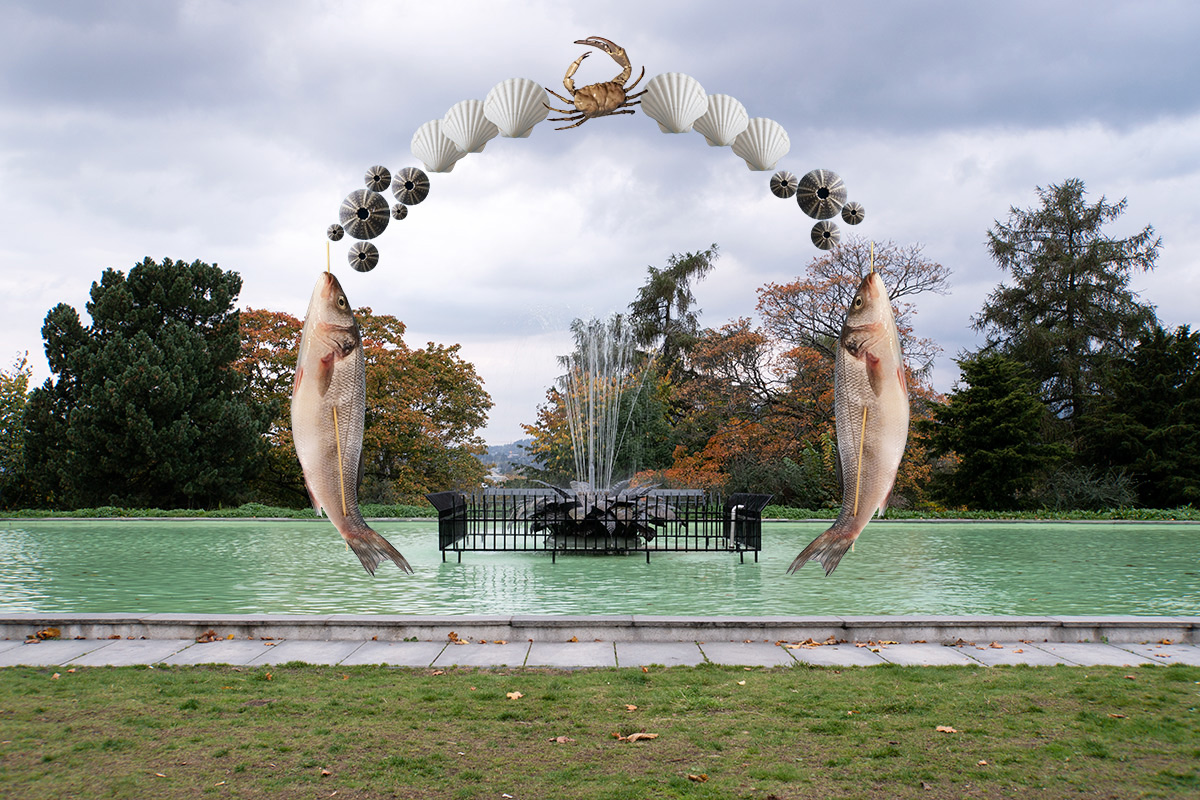
The first photomontage image in the Imperfect Circles questions the food industry. Human made square pond, borders of their habitat are shaped and reflect the consequence of human decisions Moreover, Species in the contemporary epoch especially ones live in endless oceans are becoming components of the food industry. The obvious circler arrangement demonstrates human centered life cycles of species depicted in the image. Previous
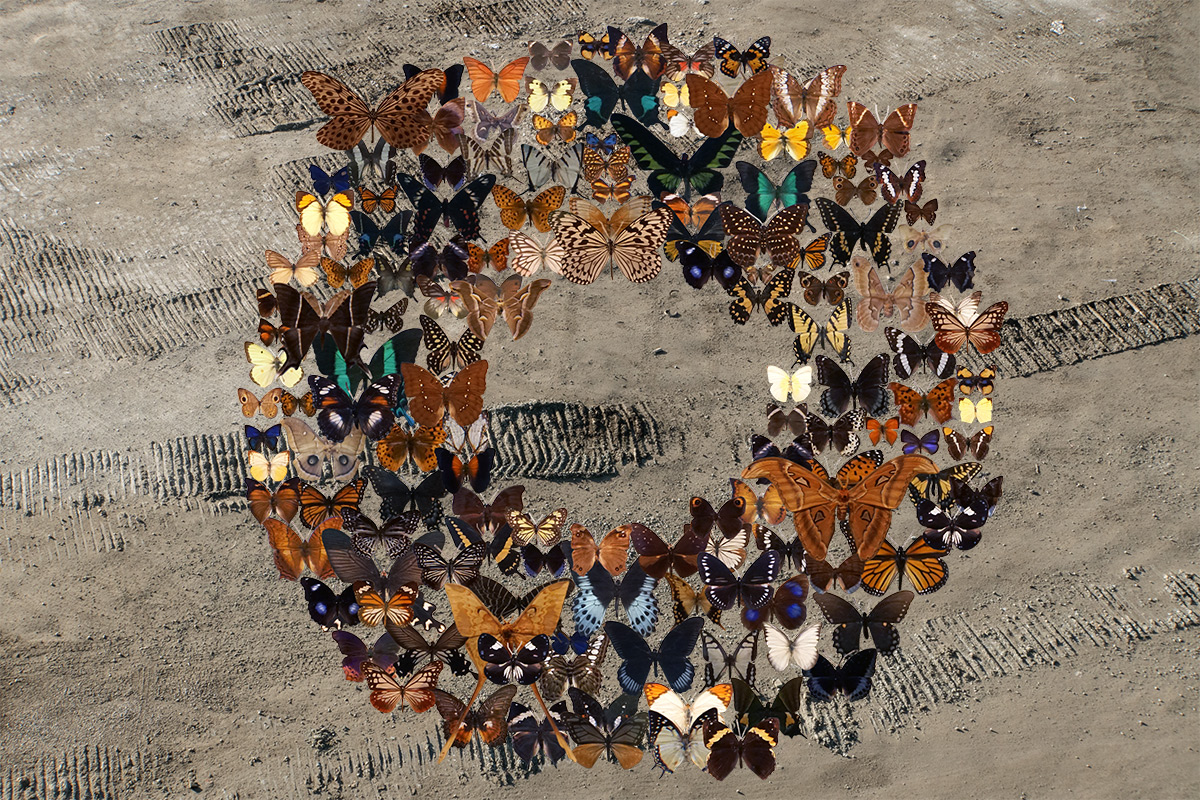
Butterflies are maybe the most favorable type of insects. Surely their existence in gardens is desirable unlike the less favorable ones. Human does not only shape the landscapes, also it garnishes the domesticated lands. This photo collage question the boundaries and existence of flora as a decision making process of human.
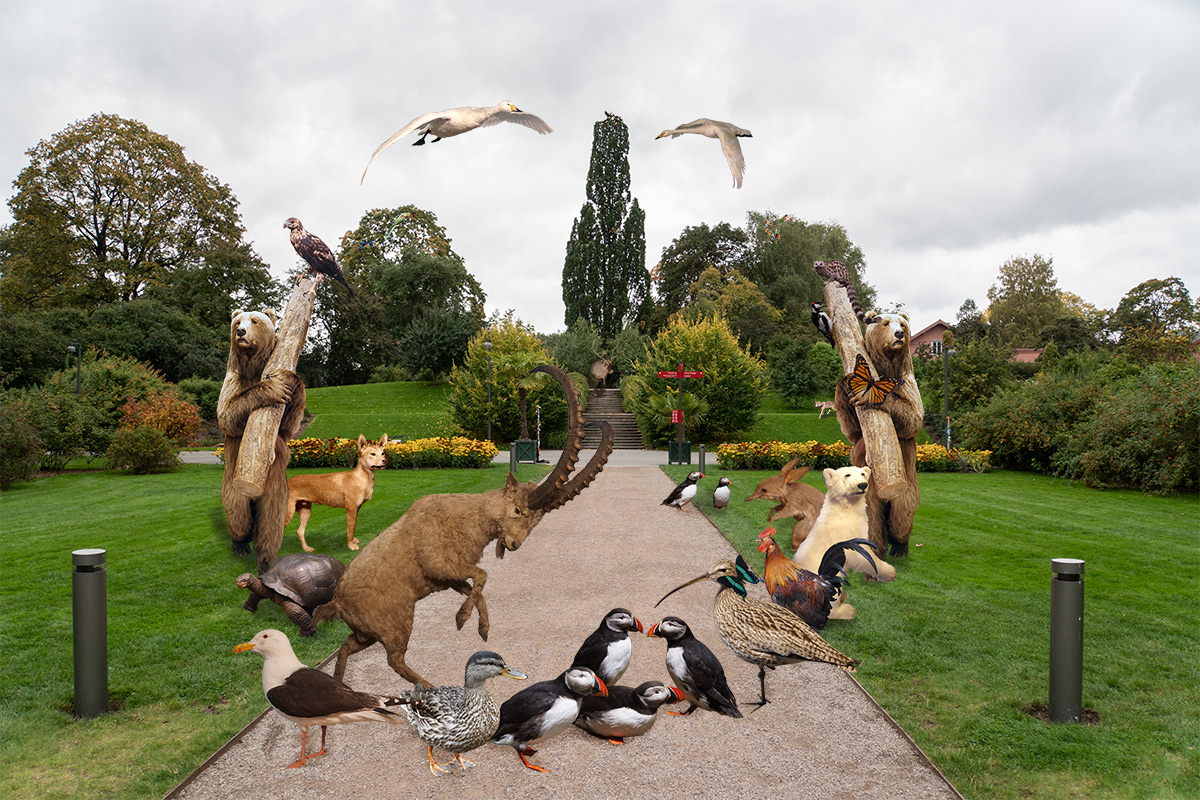
Animal bodies in a domesticated setting portray diminished wilderness and existence of ornamental entities. In the current epoch every being appears on landscapes seems reflects human desires. Desirable and Controlled environment is generated for desirable species in the world of human.
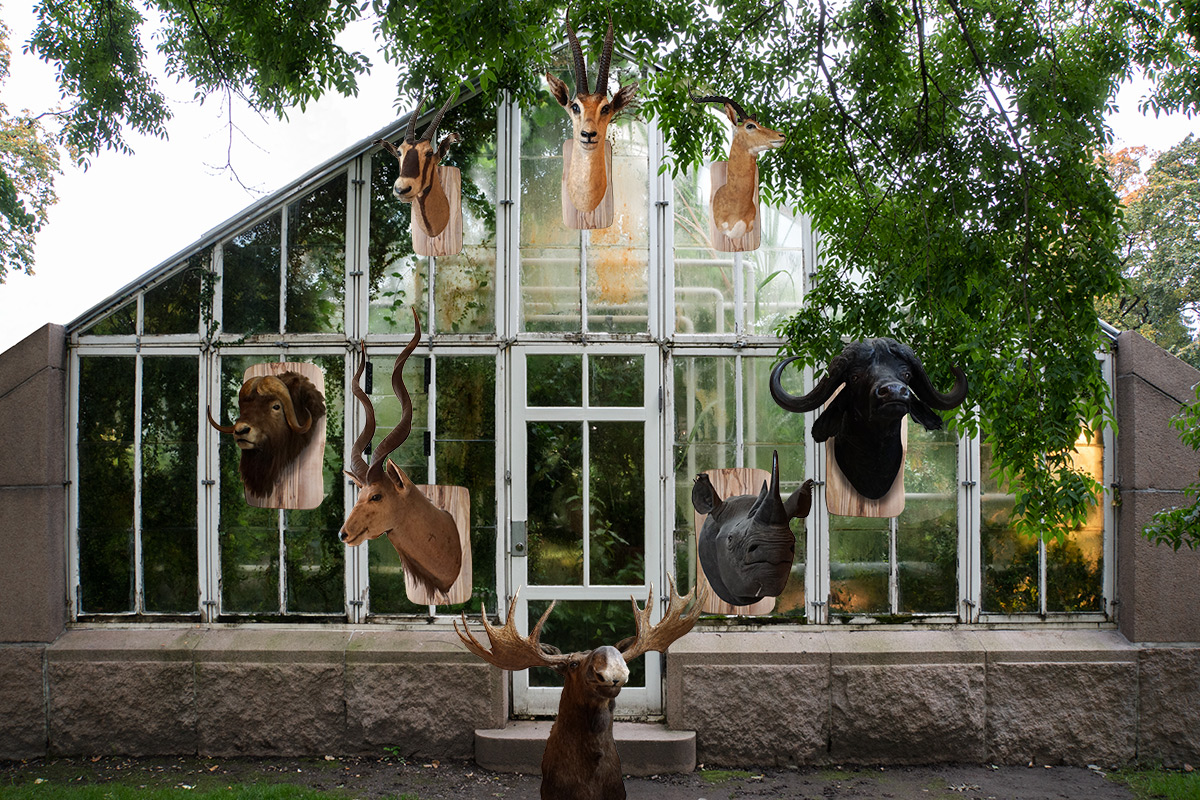
Animal heads as a visual representation of hunting portrays objectification of other species by human-being. These are representative elements of human glory against nature, wilderness and all other species.
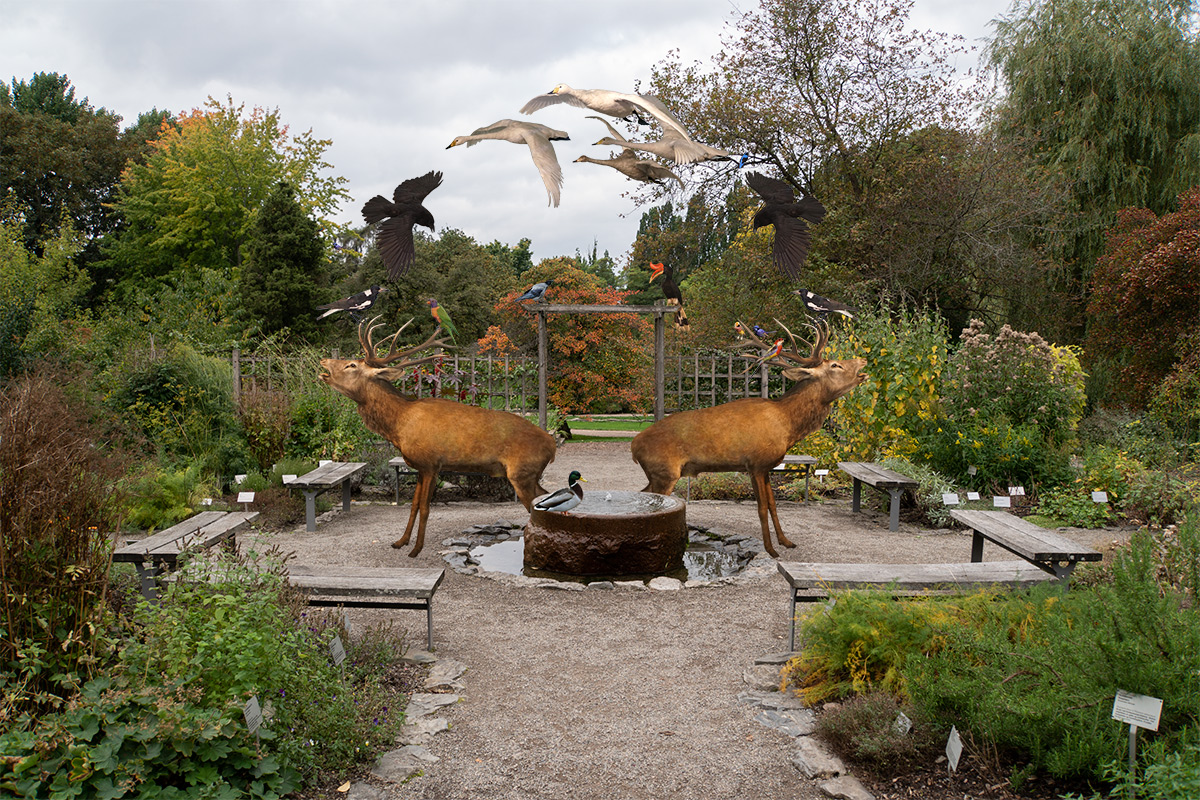
Branches of trees, herbs and other species of plants also demonstrate process of domestication. Genetic mutations, symmetrical arrangements and designed gardens remind me interwined relationship between cultural and natural spheres. Fauna of today reflects production and consumption cycles of the food industry and human centered judgments of beauty.
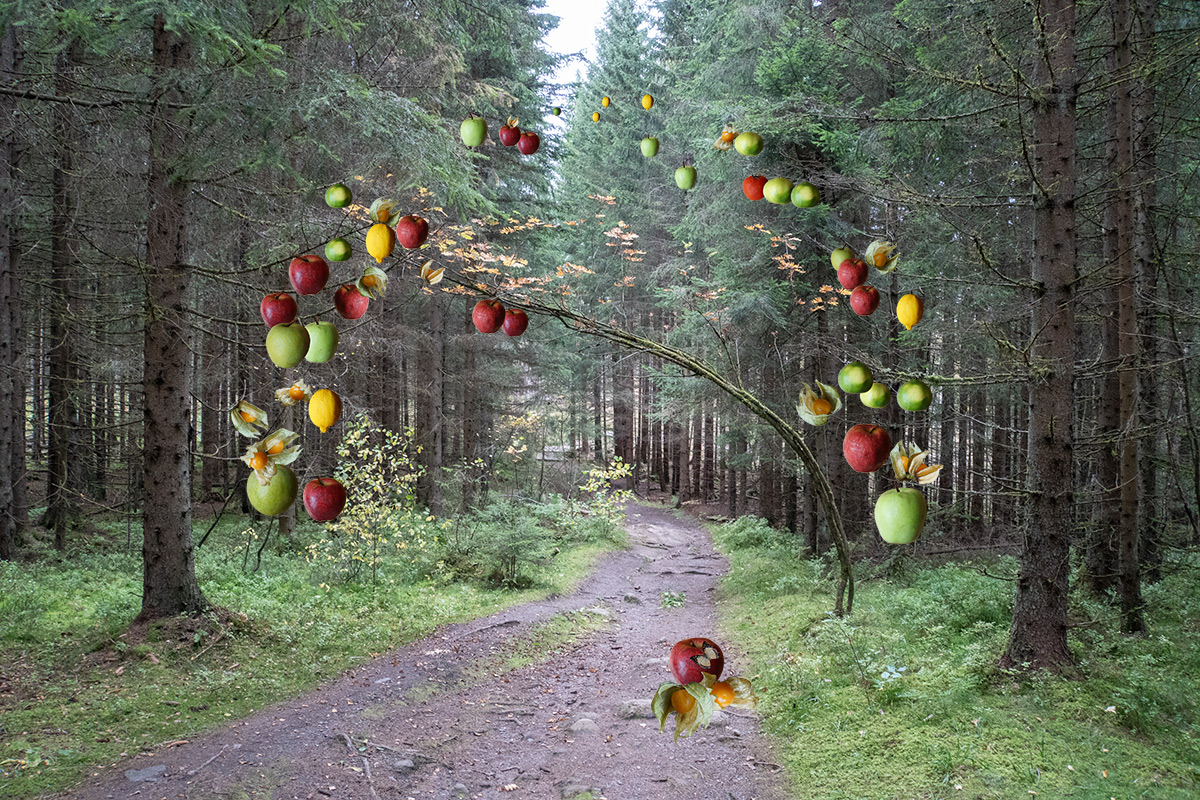
Lastly the world is far from being wild and human influences all other life cycles in order to fulfill its certain needs. Anthropocentric revolution of earth is not only visible in redesigned territories; it is also visible in objectification of animals since they live like objects of production and consumption cycles. Circler Allocation of animals in images is a clear emphasis on human centered symmetrical arrangements of flora and direct human influence of life cycles of the animal kingdom.


